
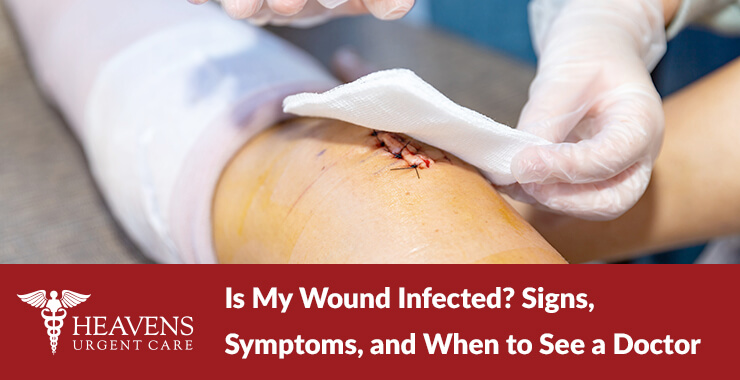
What seems like a scrape, minor cut, or wound could be harboring something nasty like an infection. So, how can you tell if that slight redness and swelling isn’t something more serious?
“It’s easy to miss early signs of an infection from a wound. The seemingly harmless cut can become infected within 24 to 48 hours.” – Dr Jason Heavens, Heavens Urgent Care | Heavens Medical
Wound infections occur when injuries to the skin and underlying tissues become contaminated by bacteria, viruses, or fungi, often leading to complications.
This article explores the early signs of a wound infection, how wounds differ for people who are diabetic, and the type of wounds that have a higher chance of becoming seriously infected.
First Signs of a Wound Infection
If you have a wound, it’s normal to have some inflammation which can cause redness, swelling, warmth, some tenderness, and even a little drainage (as long as it’s clear or a light pink fluid).
Make sure that you watch how the wound heals during those first few days, look for:
- Pain that intensifies
- Warmth and redness that spreads around the wound
- Swelling that gets worse
- Drainage that is yellow, green, or cloudy
- A wound that doesn’t seem to heal
TIP: People with diabetes or neuropathy may have a serious infection even if they have little to no pain or drainage.
Contact your provider if your symptoms get worse or if you notice signs of infection.
4 Wounds That Can Become Easily Infected
- Animal or Human Bites: No matter how small it looks, you should always seek medical care if an animal and human bite breaks the skin. It’s especially important to have a provider look at a bite that involves the face, genitals, or hands.
- Surgical Site Infections: One in 24 surgical patients will develop a SSI (Surgical Site Infection). That’s why, following wound care directions after a surgery is one of the most important things you can do to help with your recovery. If your symptoms change or if you have questions, call your surgeon right away.
- Puncture Wounds: If you have a wound caused by something pointed like a nail, a wood splinter, glass, or a needle, glass, have it checked. Especially if the puncture is deep, dirty or caused by a rusty object.
- Diabetic Wounds: If you have diabetes consider every wound a serious, especially if it is located on your feet. Diabetic wounds can be infected even if you have little or no pain.
Reducing the Risk of a Wound Infection
Leaving an infected wound unattended can cause serious complications like sepsis, cellulitis, or abscesses. If you suspect an infection, contact your provider or visit and urgent care facility near you.
To reduce the risk of infection, clean the wound with soap and water, then cover it with a clean bandage. Change the dressings regularly and watch for redness, swelling, and drainage that gets worse over time.
Frequently Asked Questions About Infected Wounds
Q: Is redness around a wound normal?
A: Mild redness close to a wound is considered normal during the healing process. However, redness that gets darker and spreads, along with warmth, swelling, pain or drainage may be a sign of infection.
Q: Can an infected cut heal on its own?
A: If the cut, abrasion, or wound is showing signs of irritation and mild redness, it will usually heal on its own. A true infection though almost always needs medical treatment that often includes antibiotics.
Q: Do I need a tetanus shot for an infected would?
A: If your wound is caused by a puncture or if it is deep, dirty, or caused by a rusty object you will likely need a tetanus vaccination. A healthcare provider can check your vaccine records to see if you will need the vaccine.
Q: When should I go an urgent care for a wound infection?
A: Go to an urgent care for a wound that doesn’t seem to heal, especially if redness around the wound is spreading, the pain is worse, and if there is a fever or pus. Make certain that you see a medical provider for animal or human bites, or if you need stitches.
Be especially careful if you have wound and have been diagnosed with diabetes or a condition that has resulted in a weakened immune system.
Not Sure If Your Wound Is Infected?
Most minor wounds heal without medical intervention. Symptoms that include mild redness, swelling, or irritation are usually part of the normal healing process, but when in doubt, have your wound checked out by a medical provider.
At Heavens Urgent Care we can evaluate bites, cuts, puncture wounds, or other injuries to make sure that you are healing quickly and correctly.

Other Useful Articles
This article is for educational purposes only and is not a substitute for medical advice, diagnosis, or treatment. Intermittent fasting may not be appropriate for everyone, especially people with chronic health conditions, diabetes, or medication-related concerns. If you are thinking about starting a fasting routine, please speak with a qualified medical professional first.