
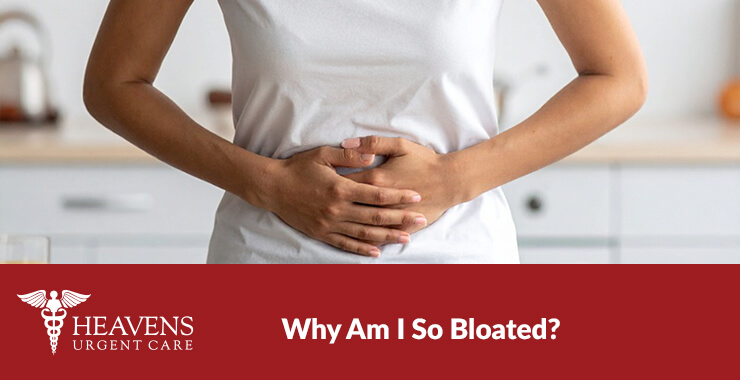
Looking to beat the bloat? Bloating is one of the most common digestive complaints and, for many, one of the most frustrating. Bloating shows up at the most inconvenient times and places whether it’s after meals or it comes out of nowhere, that fullness and pressure can leave you feeling uncomfortable, sluggish, and unsure of what to do next.
Occasional bloating is normal, but when it becomes frequent or severe, it could be your sign that something deeper is going on.
TIP: Severe or chronic bloating occurs 3–4 times per week.
In this Heavens Urgent Care article, we’ll walk through the symptoms, causes, who is most affected, and what you can do at home to find relief. Plus, we’re including information, so you’ll know when it’s time to seek medical care.
How Does Bloating Feel?
Think of a trapped balloon inside your abdominal area. People often describe bloating this way. Words like “a feeling of fullness, pressure, or tightness” in the abdomen, is often used.
Common symptoms of bloating include:
- A swollen or enlarged abdomen
- Feeling full quickly when eating
- Abdominal discomfort or cramping
- Excess gas or frequent burping
- A heavy or “stuck” feeling in the gut
While these symptoms can come and go, persistent bloating shouldn’t be ignored, especially if it interferes with your daily life.
What Causes Bloating?
Bloating can be caused by several factors, that often overlap. The most common causes include digestive imbalances, diet, and stress.
1. Gas and Fermentation in the Gut
One of the most common causes of bloating that we see in our medical office is simply excess gas production. Gas and fermentation in the gut are primarily caused by bacteria in the large intestine breaking down undigested carbohydrates (fiber, sugars, starches). This fermentation process produces hydrogen, methane, and carbon dioxide.
Foods high in fermentable carbohydrates (known as FODMaPs) can increase gas production, especially in individuals with sensitive digestive systems.
The Low FODMaP diet works in two ways:
- It is low in sugars that can be difficult to absorb. These sugars can lead to increased fermentation and gas.
- Reducing overall sugar intake reduces the osmotic pull of fluids into the intestine, which can reduce diarrhea. This may explain why some research indicates that the FODMaP diet improves pain and boating symptoms by up to 75%, predominately in those with IBS associated with diarrhea.
The U.S. Department of Veterans Affairs has an easy-to-follow downloadable low FODMaP diet plan that you can get here.
Recent research shows that altered gut microbiota and fermentation patterns can contribute significantly to bloating symptoms, particularly in individuals with irritable bowel syndrome (IBS).

2. Food Intolerances
Many people experience bloating because certain foods are difficult for them to digest. Most of the trouble comes from dairy, artificial sweeteners, and certain fibers or resistant starches. Food intolerances don’t always cause tummy trouble immediately, so this makes them harder to identify. Keeping track of what you eat and when you eat in a food diary can help.
3. Slowed Digestion (Motility Issues)
When food moves too slowly through the digestive tract, gas can build up and cause bloating. This can be influenced by stress and nervous system imbalance, low stomach acid, a sedentary lifestyle, and hormonal changes.
Emerging research highlights the connection between the gut-brain axis and digestive motility, showing that stress can directly impact how efficiently your digestive system functions.
4. Constipation
If bowel movements are infrequent, stool can build up in the colon, leading to pressure and bloating.
Constipation is a condition in which you may have fewer than three bowel movements a week with stools that are hard, dry, or lumpy. Most stools are also difficult or painful to pass, and sometimes a feeling that not all stool has passed through your system.
5. Hormonal Changes
Many women experience bloating related to hormonal fluctuations, particularly during their menstrual cycle. As hormones like estrogen and progesterone shift, they can affect a woman’s fluid retention, gut motility, and sensitivity to gas.
Are You Likely to Experience Bloating?
While bloating can affect anyone, certain groups tend to experience it more frequently:
- Women, especially during hormonal changes
- Individuals with IBS or sensitive digestion
- People under chronic stress
- Those with food sensitivities or intolerances
- Individuals with sedentary lifestyles
- People who eat quickly or while distracted
According to recent clinical data, bloating is reported in up to 30% of the general population and significantly higher in those with functional gastrointestinal disorders.
Source: https://pubmed.ncbi.nlm.nih.gov/35087189/
Common Food Triggers for Bloating
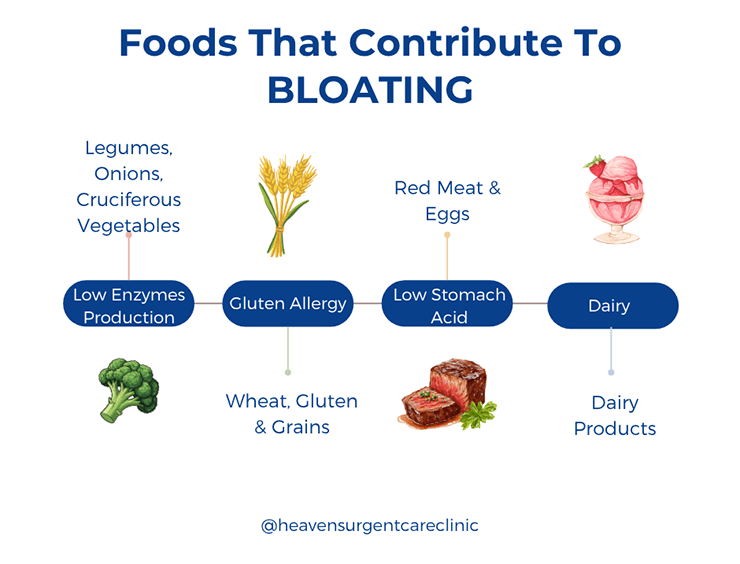
Below is a helpful guide to foods that commonly contribute to bloating.
How to Relieve Bloating at Home
Many cases of bloating can be improved with simple, consistent habits.
Slow Down When Eating
Eating quickly can cause you to swallow excess air and overwhelm your digestive system. Try to chew thoroughly, sit down for meals, and avoid distractions like screens.
Support Your Gut with Whole Foods
Try focusing on meals that are easy to digest like lean proteins, cooked vegetables, healthy fats, and rice or potatoes.
Stay Hydrated
Water is a friend in so many healthy ways, but its role in supporting digestion and preventing constipation, cannot be overstated, so drink up.
Manage Stress
You might be surprised to learn that your digestive system is closely connected to your nervous system. Chronic stress can slow down digestion and increase sensitivity to bloating.
Helpful strategies include walking after meals, breath work, and prioritizing sleep.
Try Gentle Movement
Light activity like a short walk right after eating can stimulate digestion and help move gas through the system more efficiently.
Identify Personal Triggers
Keeping a simple food and symptom journal can help you identify patterns and pinpoint what may be contributing to your bloating.
When Should You Seek Medical Care for Bloating?
While occasional bloating is common for all of us, certain symptoms may point to a more serious issue.
You should seek medical care if you experience:
- Severe or persistent abdominal pain
- Bloating that doesn’t improve with dietary changes
- Unexplained weight loss
- Blood in stool
- Ongoing nausea or vomiting
- Difficulty eating or feeling full quickly
In some cases, bloating may be linked to conditions such as IBS, small intestinal bacterial overgrowth (SIBO), or other gastrointestinal disorders that require a medical evaluation. So, if you find yourself dealing with frequent bloating, it may be helpful to look beyond short-term fixes and explore your overall digestive health.
If you’re looking for a more personalized, long-term approach to health, Dr. Jason Heavens offers comprehensive primary care through Heavens Medical in Tempe, Arizona. His practice focuses on preventive care, advanced diagnostics, and individualized wellness plans to help address the root causes of symptoms like bloating.