Whether you call it an STD or an STI, getting tested for a sexually transmitted disease shouldn’t be embarrassing, stressful or complicated. Whether you’re entering a new relationship, experiencing unusual symptoms, or simply taking charge of your sexual health, knowing where to turn for confidential STD testing and treatment can make all the difference.
At Heavens Urgent Care in Apache Junction, Arizona, adults can receive discreet STD testing, diagnosis and treatment in a professional, judgment-free environment. With walk-in visits and scheduled appointments available, getting answers is easier (and less stressful) than you might think.
Why STD Testing Matters - Even Without Symptoms
Most people don’t know it, but you can have an STD without experiencing any noticeable symptoms? In fact, infections such as chlamydia, gonorrhea, and HPV frequently go undetected until complications develop.
According to the Arizona Department of Health Services, the state recorded tens of thousands of reported chlamydia and gonorrhea cases in 2025. These infections affect adults of all ages, not just younger people. Without treatment, certain STDs can cause infertility, pelvic inflammatory disease, chronic pain and other serious health problems.
Regular testing is especially important if you have a new sexual partner, multiple partners, symptoms of an infection or a partner who has tested positive for an infection.
What Are the Most Common STDs?
Modern testing can identify many sexually transmitted infections (STIs), allowing healthcare providers to recommend appropriate treatment.
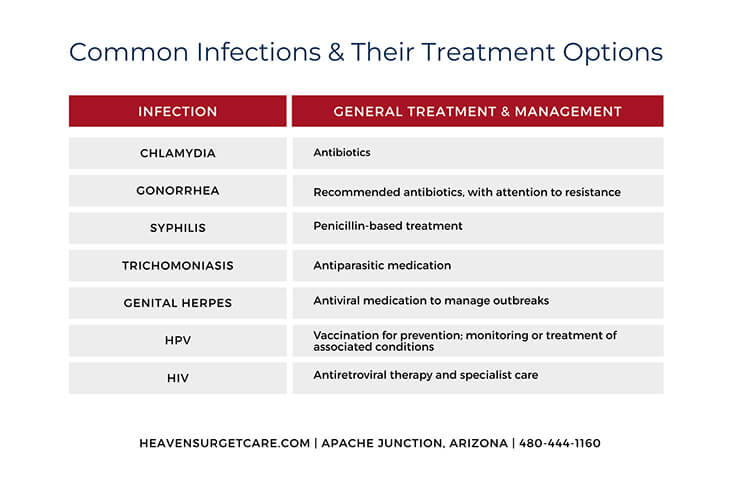
Not everyone needs every test. Your healthcare provider can help determine which screenings are appropriate based on your symptoms, medical history, and possible exposures.
What Happens During an STD Test at an Urgent Care?
If you’ve been putting off testing because you’re worried about the process, you’ll be relieved to know that most STD tests are relatively quick and straightforward. At Heavens Urgent Care, your visit begins with a private consultation. A healthcare provider will discuss your symptoms, sexual health history, and any concerns you may be experiencing.
Depending on your situation, testing may include:
- Urine testing: Commonly used to detect chlamydia and gonorrhea.
- Blood testing: Used to screen for infections such as HIV and syphilis.
- Swab testing: May be recommended for genital symptoms or possible infections of the throat or rectum.
Testing is selected according to your individual needs. Results are usually available within a few days, although timing depends on the test. Heavens Urgent Care provides private consultation rooms, discreet results notification and standard medical privacy protections. Your health information is handled according to applicable privacy requirements.
Can STDs Be Treated Successfully?
Absolutely! Many common STDs are curable, while others can be managed effectively with modern medications.
Bacterial infections such as chlamydia, gonorrhea and syphilis can generally be cured with appropriate antibiotics. Viral infections such as herpes and HIV require different approaches, including antiviral medication and ongoing medical care.
Recent research has also expanded prevention options. For example, the CDC’s 2025 recommendations describe newer HIV post-exposure prophylaxis (PEP) regimens. PEP can prevent HIV after certain exposures when started promptly, ideally within 24 hours and no later than 72 hours.
TIP: If you suspect a recent HIV exposure, seek immediate medical attention rather than waiting for a routine testing appointment.
Treatment may also involve notifying sexual partners and scheduling follow-up testing. The CDC recommends retesting approximately three months after treatment for chlamydia or gonorrhea because reinfection is possible.

When Should You Get Tested for an STD?
Don’t wait for symptoms to appear. Consider testing after unprotected sex, when beginning a new relationship, if a partner receives an STD diagnosis or whenever you notice unusual genital discharge, sores, itching or painful urination.
TIP: Testing too soon after exposure may miss an infection. Your healthcare provider can recommend the appropriate testing window and determine whether repeat testing is necessary.
Practicing safer sex, receiving recommended HPV and hepatitis B vaccinations, and communicating openly with partners are additional ways to protect your health.
Discreet STD Testing Near You
Your sexual health deserves the same attention as any other aspect of your well-being.
Whether you live in Apache Junction, Gold Canyon, Mesa, Queen Creek or San Tan Valley, Heavens Urgent Care offers a convenient local option for confidential STD testing, diagnosis and treatment.
There’s no need to feel embarrassed about seeking care. Our team is here to help you understand your results, discuss appropriate treatment and take the next steps toward better health. Walk into Heavens Urgent Care or schedule an appointment today. Getting tested is a simple, proactive way to protect yourself and your partners.

This article is for educational purposes only and is not a substitute for medical advice, diagnosis, or treatment. Intermittent fasting may not be appropriate for everyone, especially people with chronic health conditions, diabetes, or medication-related concerns. If you are thinking about starting a fasting routine, please speak with a qualified medical professional first.