
Arizona summers bring us plenty of glorious sunshine, but those soaring temperatures can also take a toll on your skin. One of the most common warm-weather skin conditions is heat rash, also known as prickly heat, or miliaria. While heat rash is usually mild and can often be treated at home, not every summer rash is harmless.
Here’s how to recognize heat rash, treat it, and know when it’s time to visit Heavens Urgent Care.
What Is Heat Rash?
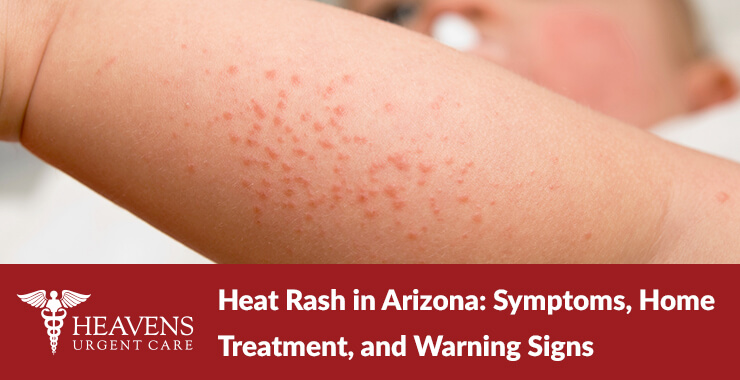
Heat rash develops when sweat becomes trapped beneath the skin because sweat ducts have become blocked. Instead of the sweat evaporating and cooling your body, it’s trapped causing irritation and small bumps to form.
Heat rash can affect anyone spending long periods in Arizona’s extreme summer heat, but it’s especially common in:
- Babies and young children
- Adults who work outdoors
- Athletes
- Hikers
- Seniors
Heat rash often appears on areas where clothing traps heat and moisture, including the neck, chest, back, armpits, groin, elbows, and behind the knees.
Three Different Types of Heat Rash
Not all heat rash looks the same. There is a difference between a minor, annoying irritation and a skin rash that needs medical attention.
Miliaria Crystallina: This is the mildest form of heat rash. Tiny, clear, fluid-filled blisters appear on the skin but usually aren’t painful or itchy. They often resolve on their own within a day or two.
Miliaria Rubra: Also called prickly heat, is the most common type of heat rash. It goes deeper into the dermis and causes small red bumps, itching, and a prickling or stinging sensation. It may become uncomfortable, especially during physical activity or continued heat exposure.
Miliaria Profunda: This less common form of heat rash develops when sweat becomes trapped deeper in the skin. It causes larger, flesh-colored bumps and is more likely to occur after repeated episodes of milder heat rashes.
How to Treat Heat Rash at Home
Most cases of heat rash improve within a few days with simple home care.
To help your skin heal:
- Move into an air-conditioned or shaded environment.
- Take a cool shower or bath.
- Apply cool, damp compresses to affected areas.
- Wear loose-fitting, lightweight clothing.
- Keep your skin as dry as possible.
- Avoid heavy lotions or petroleum-based ointments that can trap heat.
- Calamine lotion may help relieve itching.
- A low-strength hydrocortisone cream may help adults with itchy heat rash, but it should be used cautiously and generally not on young children unless recommended by a healthcare provider.

How to Prevent Heat Rash
Arizona’s climate makes prevention especially important. You can reduce your risk by drinking plenty of water and taking breaks in the shade or air conditioning.
Wear light-colored, breathable clothing and shower after outdoor activities. Simply changing out of sweaty clothing promptly and avoiding strenuous outdoor activity during the hottest part of the day, typically between 10 a.m. and 4 p.m. can also help.
Not Every Summer Rash Is Heat Rash
Many rashes become more common during the summer months include:
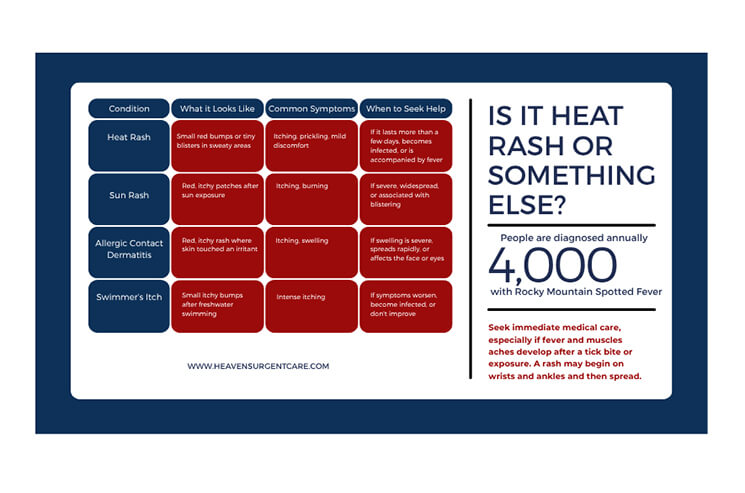
- Sun rash (polymorphous light eruption): An itchy rash that develops after sun exposure.
- Allergic contact dermatitis: Caused by reactions to plants, sunscreen, soaps, detergents, or other products.
- Swimmer’s itch: An itchy rash that is an allergic reaction to microscopic parasites naturally released by snails into fresh or saltwater.
- Poison ivy or poison oak: Less common in Arizona than many other states but still possible during outdoor activities.
- Large insect bite reactions: Mosquitoes, ants, bees, and other insects can cause redness, swelling, and itching that may resemble a rash.
Rocky Mountain Spotted Fever: Don't Ignore This Rash
Although uncommon, Rocky Mountain spotted fever (RMSF) is one summer illness that requires immediate medical attention.
RMSF is caused by bacteria spread through the bite of an infected tick. Cases have been reported in Arizona, particularly in certain tribal communities where the brown dog tick has contributed to outbreaks.
Early symptoms are fever, severe headache, muscle aches, nausea or vomiting and fatigue.
A rash may develop several days after the fever begins. It often starts on the wrists and ankles before spreading toward the arms, legs, and trunk. The rash may also involve the palms of the hands and soles of the feet.
NOTE: Not everyone with RMSF will develop a rash right away, so delaying treatment while waiting for one to appear can be dangerous.
If you develop a fever after a tick bite or possible tick exposure, seek medical care immediately. Early treatment with antibiotics is essential and can be lifesaving.
Is It Heat Rash or Something Else?
When Should You Visit Urgent Care?
Many cases of heat rash improve with home treatment, but medical evaluation is recommended if:
- The rash lasts longer than several days.
- You develop a fever.
- The rash becomes painful.
- Pus or drainage develops.
- Redness spreads quickly.
- The rash covers a large area of the body.
- An infant develops a severe or persistent rash.
- You suspect a tick-borne illness such as Rocky Mountain spotted fever.
Stay Comfortable All Summer Long
Most heat rashes are mild and improve quickly with cooling measures and good skin care. However, because several summer rashes can look similar, it’s important to know when symptoms may signal something more serious.
If you or your child develops a rash that isn’t improving, becomes painful, or is accompanied by fever or other concerning symptoms, the experienced team at Heavens Urgent Care in Apache Junction is here to help. We provide prompt evaluation and treatment for heat rash, allergic reactions, insect bites, skin infections, tick bites, and many other non-life-threatening summer illnesses and injuries.
For severe allergic reactions, difficulty breathing, or signs of a medical emergency, call 911 immediately.

This article is for educational purposes only and is not a substitute for medical advice, diagnosis, or treatment. Intermittent fasting may not be appropriate for everyone, especially people with chronic health conditions, diabetes, or medication-related concerns. If you are thinking about starting a fasting routine, please speak with a qualified medical professional first.