

Coughing, wheezing, chest tightness, that feeling you just can’t get a full breath can be unsettling, especially when it just won’t let up. Is it asthma? Bronchitis or something else? Both can feel similar, but the causes and treatments are different.
Knowing which one you’re dealing with helps you get the right treatment fast and avoid complications. Let’s break down what sets asthma and bronchitis apart, what to watch for, and when you really should see a doctor (or head straight for urgent care).
What Is Asthma?
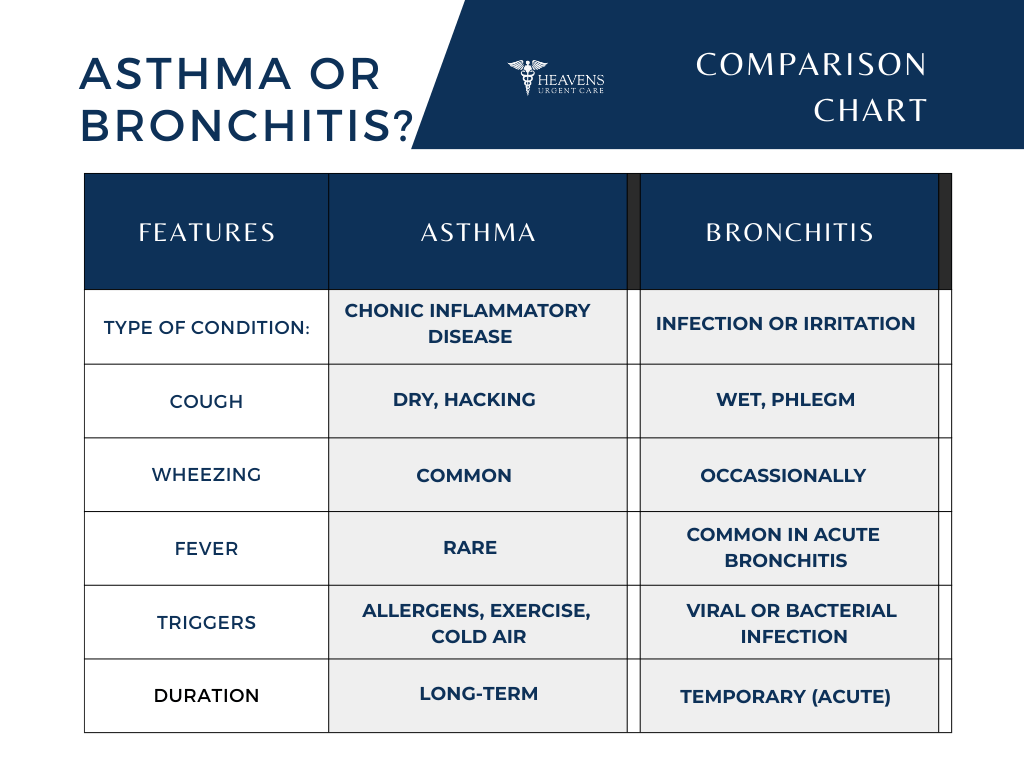
Think of asthma as a long-term condition that makes your airways inflamed and twitchy. When something sets it off like pollen, cold air, exercise, or smoke your airways swell up and become narrow, so breathing gets harder.
Asthma symptoms aren’t constant; they come and go, sometimes flaring up without much warning.
What Does Asthma Feel Like?
- Wheezing (that whistling noise when you breathe)
- Shortness of breath
- Chest tightness or a heavy feeling
- Coughing, often worse at night or first thing in the morning
- Symptoms that start after exercise, around allergies, or when you catch a cold
Asthma doesn’t just disappear, even when you feel okay for a while. It’s a condition that needs to be managed to avoid flare-ups and long-term lung problems.
TIP: Many people wonder if asthma is treatable. Fortunately, there are many good treatments available today. Some asthma medicines relax your airways and help you breathe easier, while other treatments reduce the swelling and inflammation in your airways, and some medicines help prevent asthma symptoms.
What Is Bronchitis?
Bronchitis means your bronchial tubes (the big airways in your lungs) are inflamed. Usually, it’s because of an infection which leads to extra mucus and a cough that just keeps hanging on.
There are two types of infection:
Acute Bronchitis
- Usually triggered by a virus (like right after a cold or the flu)
- Shows up suddenly and lasts about 1–3 weeks
- Both kids and adults get it
Chronic Bronchitis
- Some end up with COPD also known as Chronic Obstructive Pulmonary Disease
- Diagnosed when you have a “wet” cough that lasts at least three months a year, two years in a row
- Most common in adults, especially smokers or those exposed to lung irritants
Asthma vs. Bronchitis in Kids
Kids don’t always show the same signs as adults, which can make things confusing. Asthma in children often looks like coughing at night, or when they’re running around. Asthma can also present as wheezing, especially with a cold or easily running out of breath during play.
Asthma affects an estimated 8.4% of children in the United States.
Some children experience multiple bronchitis episodes that never quite go away. Bronchitis in children usually means a wet, hacking cough that sticks around after a cold. Some kids get a fever and feel extra tired. Symptoms tend to slowly get better, even without inhalers or special treatments.
If your child keeps getting bronchitis, it’s worth asking if it’s actually undiagnosed asthma.
Asthma vs. Bronchitis in Adults
Adults with asthma often notice that classic tight chest, wheezing, or just not being able to catch a good breath.
Bronchitis in adults tends to come with thick, stubborn mucus and a cough that won’t quit. There’s also chest discomfort and fatigue. If you smoke, or used to, you have a higher risk of chronic bronchitis, which needs a different treatment plan than asthma.
When Should You See a Doctor?
Don’t try to tough it out if you or your child has a cough lasting more than 10–14 days. Or, if either of you begins wheezing or has trouble catching your breath. Other symptoms of concern are chest pain or tightness and repeated chest colds or bronchitis.
Pay attention to symptoms that are getting worse, not better especially for a child who struggles with daily activities because of breathing problems. Getting checked out early means you’ll know if it’s asthma, bronchitis, or something else and you’ll get the right treatment for your child sooner.
Quick Note on COPD
COPD includes chronic bronchitis and emphysema, and it’s usually linked to smoking or breathing in lung irritants for years. COPD doesn’t just flare up and go away—symptoms like long-term cough, thick mucus, wheezing, and shortness of breath get worse over time unless you treat it.
COPD can look a lot like asthma or repeat bronchitis, especially in adults, so getting the right diagnosis matters. Catching it early can slow it down, cut down on flare-ups, and help you feel better in the long run.
How Heavens Urgent Care Can Help
At Heavens Urgent Care, our team knows how stressful breathing issues can be, whether you’re an adult or a parent with a worried kid. We’ll check your lungs, test your oxygen, and figure out if you’re dealing with asthma, bronchitis, or something else… sometimes it’s even pneumonia.
We can prescribe inhalers or breathing treatments if you need them, walk you through managing symptoms, and set up follow-up appointments or referrals if things look more serious. We’re here for families in Apache Junction and the surrounding area. Walk-ins are always welcome. Simply stop by if you need us.